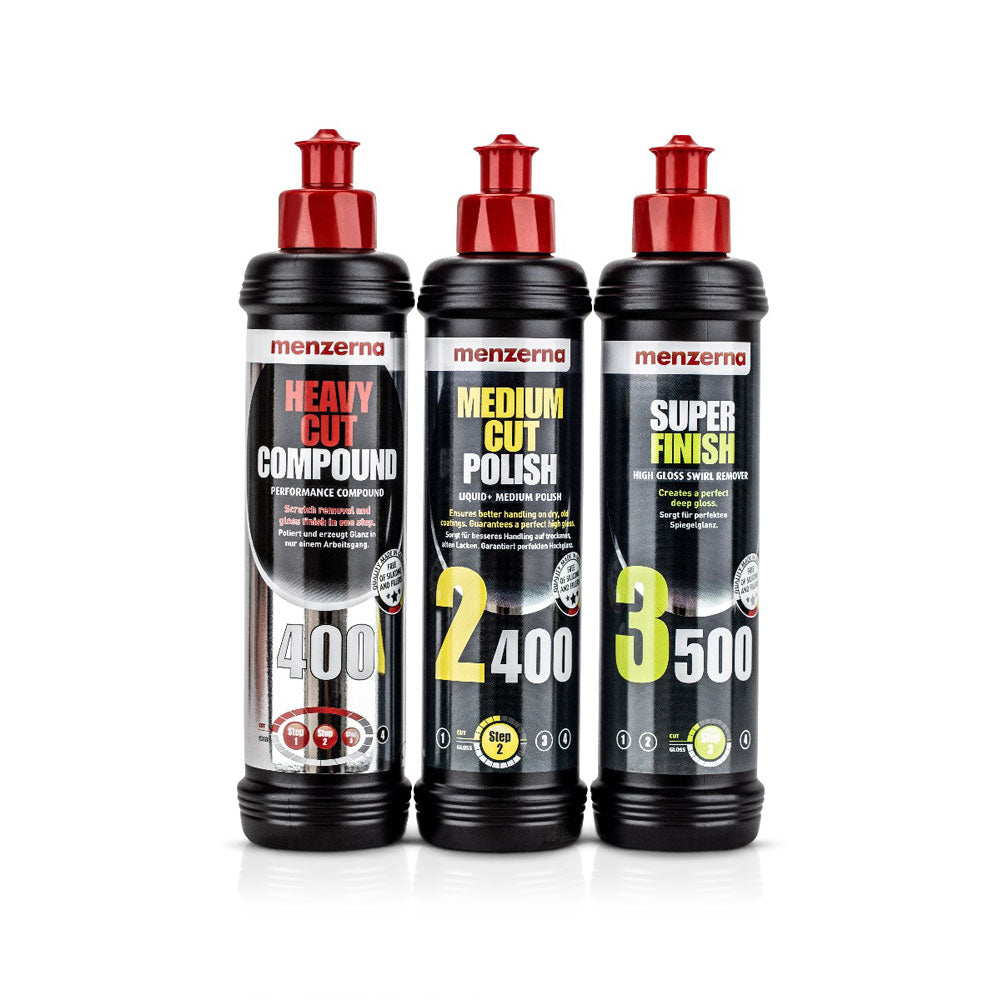
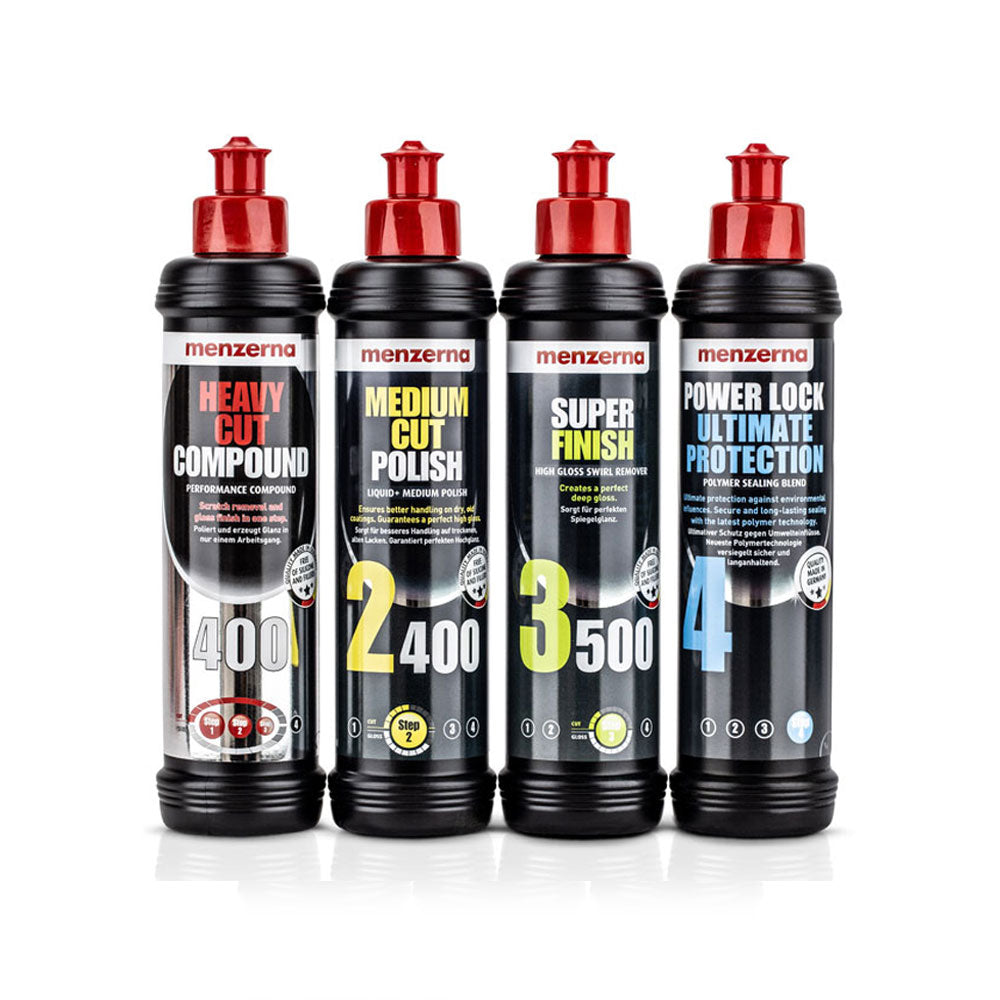
What Is Car Polish?
Car polish is an abrasive paste or liquid that levels the clear coat, removing a microscopic layer to take out defects like swirls and scratches. The more aggressive the abrasive, the more it cuts. Unlike wax or sealant, which add a protective layer on top, polish changes the paint surface itself, so it's always followed by protection.
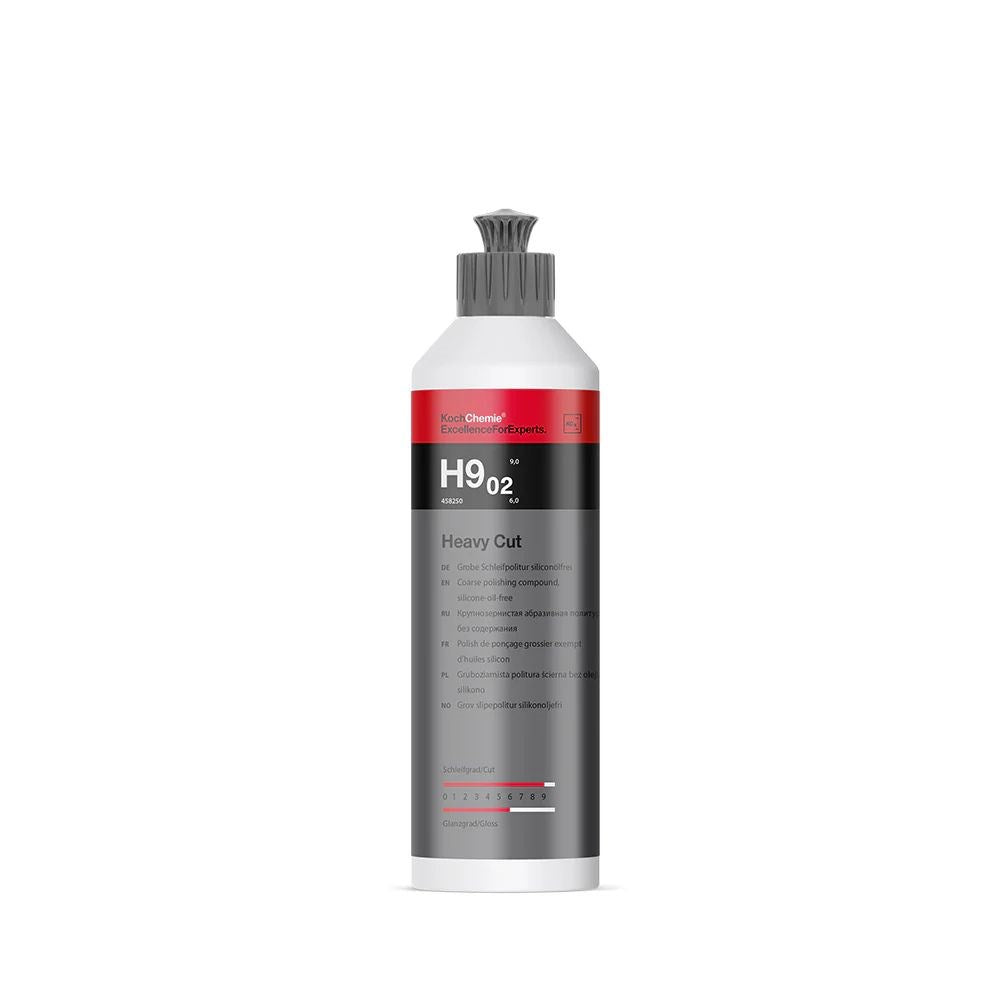
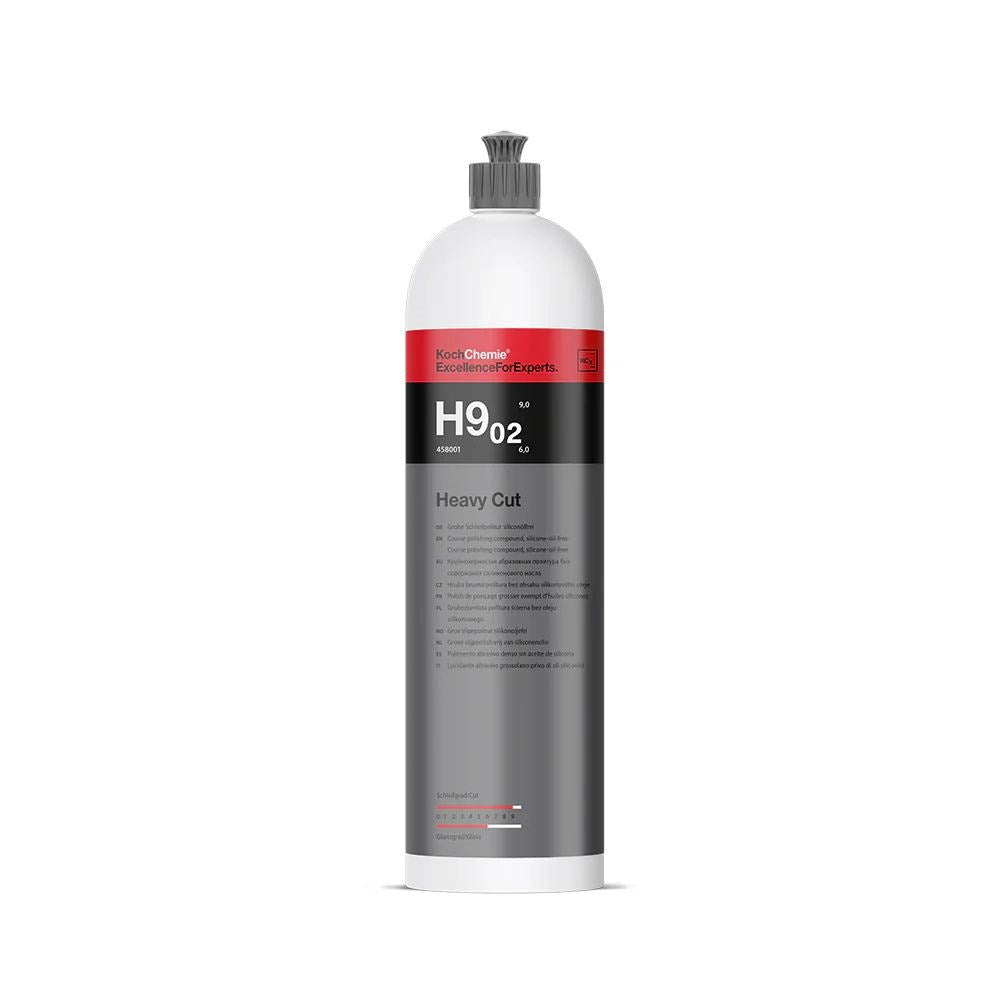
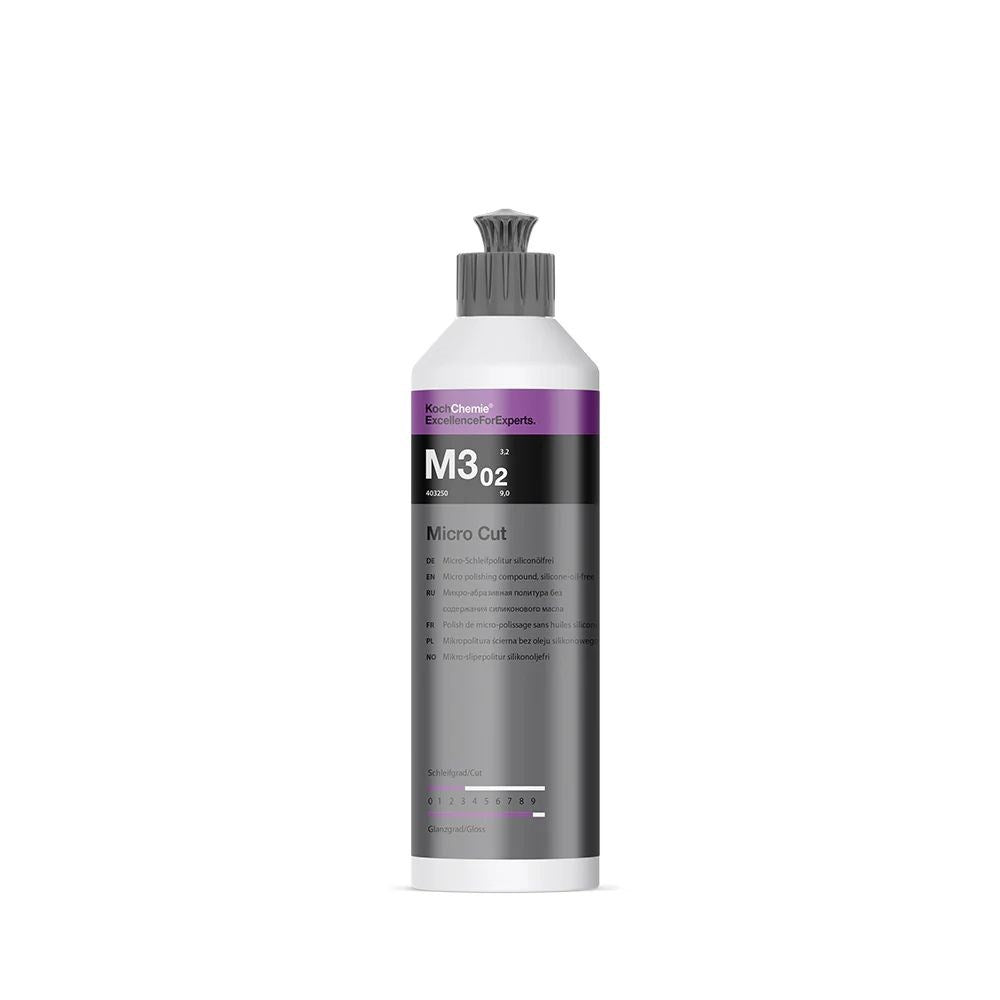
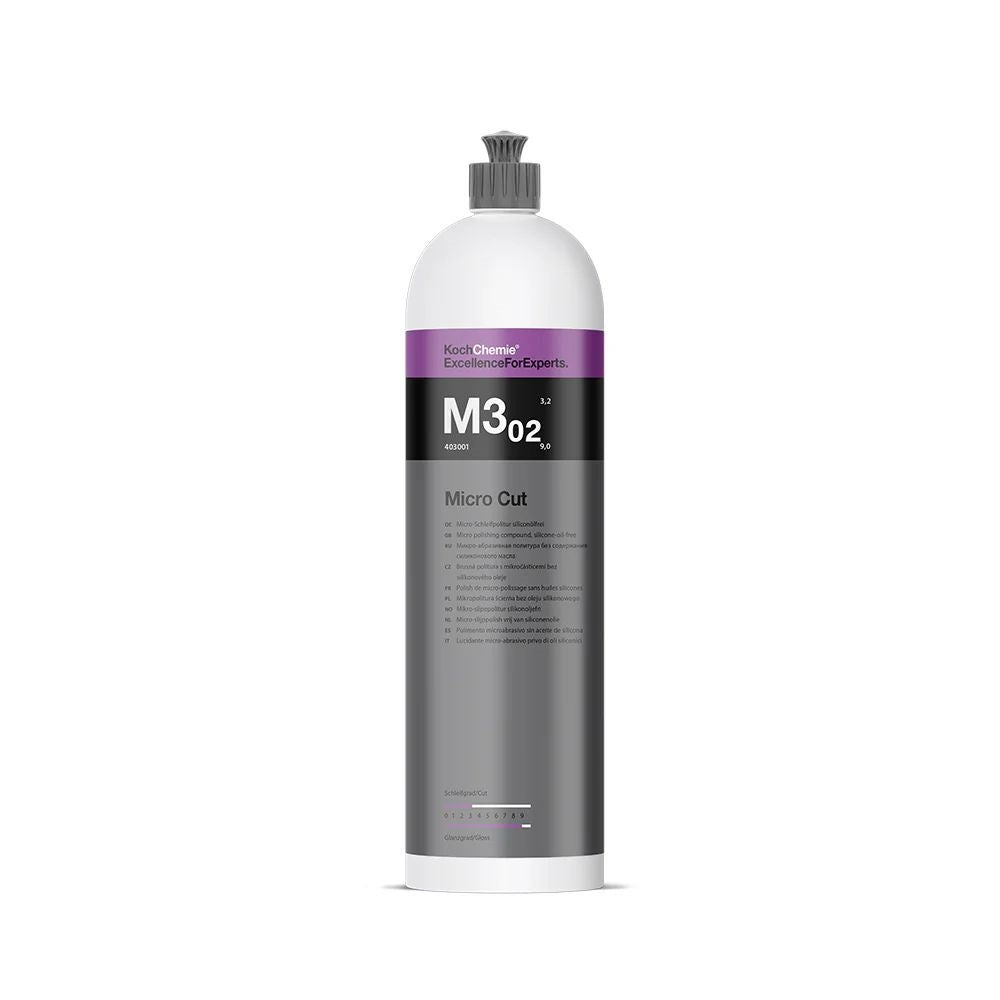
Compound vs Polish vs Finishing Polish
| Product |
Cut level |
Removes |
Finish |
| Cutting compound |
Heavy |
Deeper swirls, scratches, oxidation, sanding marks |
May leave light haze that needs refining |
| Polish (medium) |
Medium |
Light to moderate swirls and marring |
Good gloss; often a one-step on lighter defects |
| Finishing polish |
Light |
Haze and micro-marring from compounding |
Maximum gloss and clarity |
| One-step polish |
Light to medium |
Moderate defects in a single stage |
Good correction and gloss with less time |
How to Choose the Right Car Polish
-
Assess the paint under strong light to see how deep the defects are.
-
Do a test spot with your least aggressive polish and pad combination first.
-
Step up only if needed: move to a more aggressive pad or compound if the test spot doesn't remove enough.
-
Finish down: follow any compound with a finishing polish to remove haze.
-
Consider the paint: hard paints (common on many European cars) need more cut; softer paints (common on many Japanese cars) correct easily but finish carefully.
How to Remove Swirl Marks
-
Wash and fully decontaminate with iron remover and clay.
-
Mask trim with detailing tape.
-
Test spot a small area to find the right pad and polish combination.
-
Polish in small sections with slow, overlapping passes and light to moderate pressure.
-
Wipe and inspect under good lighting. Repeat or refine as needed.
-
Panel wipe with a surface cleanser to remove oils and check the true result.
-
Protect with wax, sealant or ceramic coating.
Machine vs Hand Polishing
Machine polishing with a dual action polisher is far faster and removes defects much more effectively. Hand polishing can refresh gloss and remove very light marks on small areas, but it can't match a machine for real correction. Most polishes can be applied either way; check the label.
Polishing Is Not Unlimited
Clear coat is thin and doesn't grow back. Use the least aggressive method that works, don't chase every deep scratch, and avoid heavy polishing on edges and body lines. If you're unsure, ask our team or consider a professional paint correction.
Why Buy Car Polish From Car Care Products Australia?
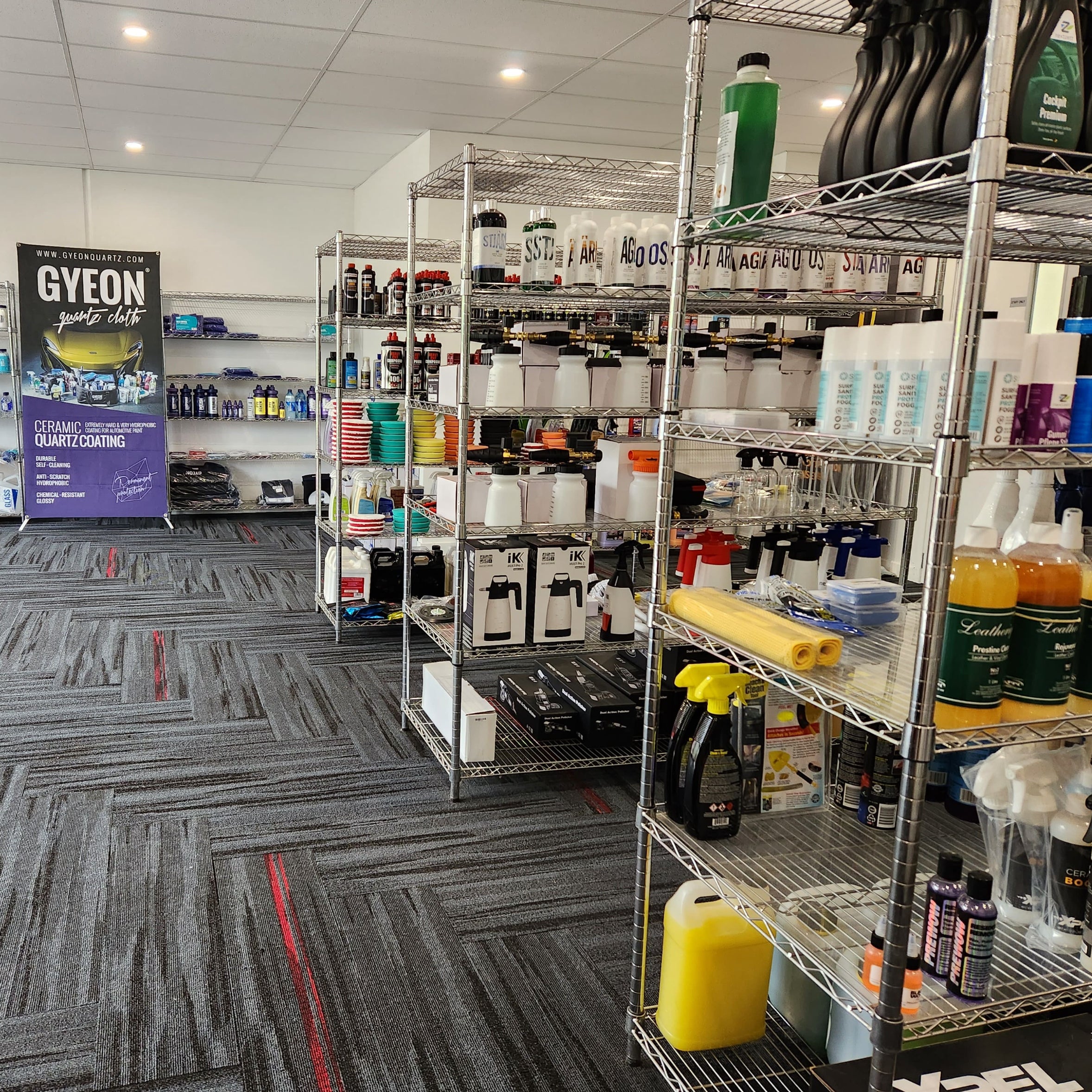
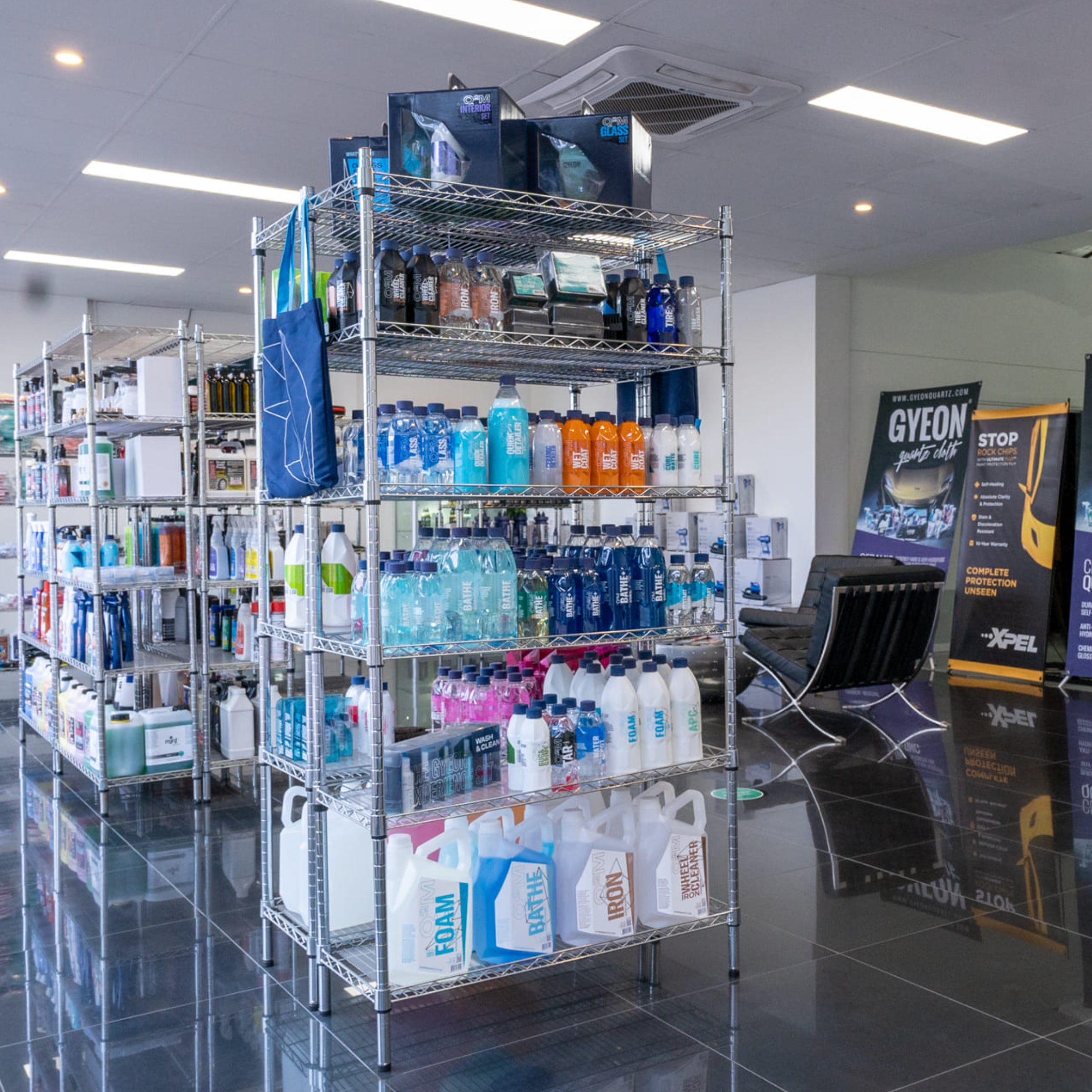
Car Care Products Australia has supplied detailing products to enthusiasts and professional detailers since 2007. We're the official Australian distributor for Menzerna polishing compounds and GYEON, and our team uses these products every day. Not sure which polish is right for your paint? Visit our showrooms in Leichhardt, Sydney or Murarrie, Brisbane, call 1300 006 007, or contact our team. Free shipping on orders over $150 (conditions apply).
Car Polish & Compound FAQs
What is the difference between compound and polish?
A cutting compound has more aggressive abrasives to remove deeper swirls, scratches and oxidation. A polish is finer and refines the paint, removing lighter defects and the haze left by compounding to restore gloss and clarity.
What is the best car polish?
The best car polish is the least aggressive one that removes your paint's defects, confirmed with a test spot. Many enthusiasts start with a quality medium polish or one-step polish, adding a cutting compound for deeper defects and a finishing polish for maximum gloss.
Can car polish remove scratches?
Polish can remove swirl marks and light scratches that sit within the clear coat. Deeper scratches that catch your fingernail, or that go through to the base colour, can't be fully polished out and may need touch-up paint or a professional repair.
How do I remove swirl marks from my car?
Wash and decontaminate the paint, then machine polish with a suitable pad and polish, starting with a test spot. Finish with a panel wipe to check the result, and protect the paint with wax, sealant or ceramic coating.
Do I need to polish before ceramic coating?
Yes, in most cases. A ceramic coating locks in the paint's condition, so polishing first removes swirls and defects and gives the best gloss. Follow with a panel wipe to remove polishing oils before coating.
Can I polish my car by hand?
You can refresh gloss and remove very light marks by hand, but real correction of swirls and scratches needs a machine polisher. A dual action polisher is safe and effective for beginners.
How often should I polish my car?
Only when needed, because each polish removes a small amount of clear coat. Most well-maintained cars need correction every few years at most. Good washing technique and protection reduce how often you need to polish.
Do I need to wax after polishing?
Yes. Polishing removes protection and leaves bare paint, so always follow with wax, sealant or ceramic coating to protect the finish and lock in the gloss.